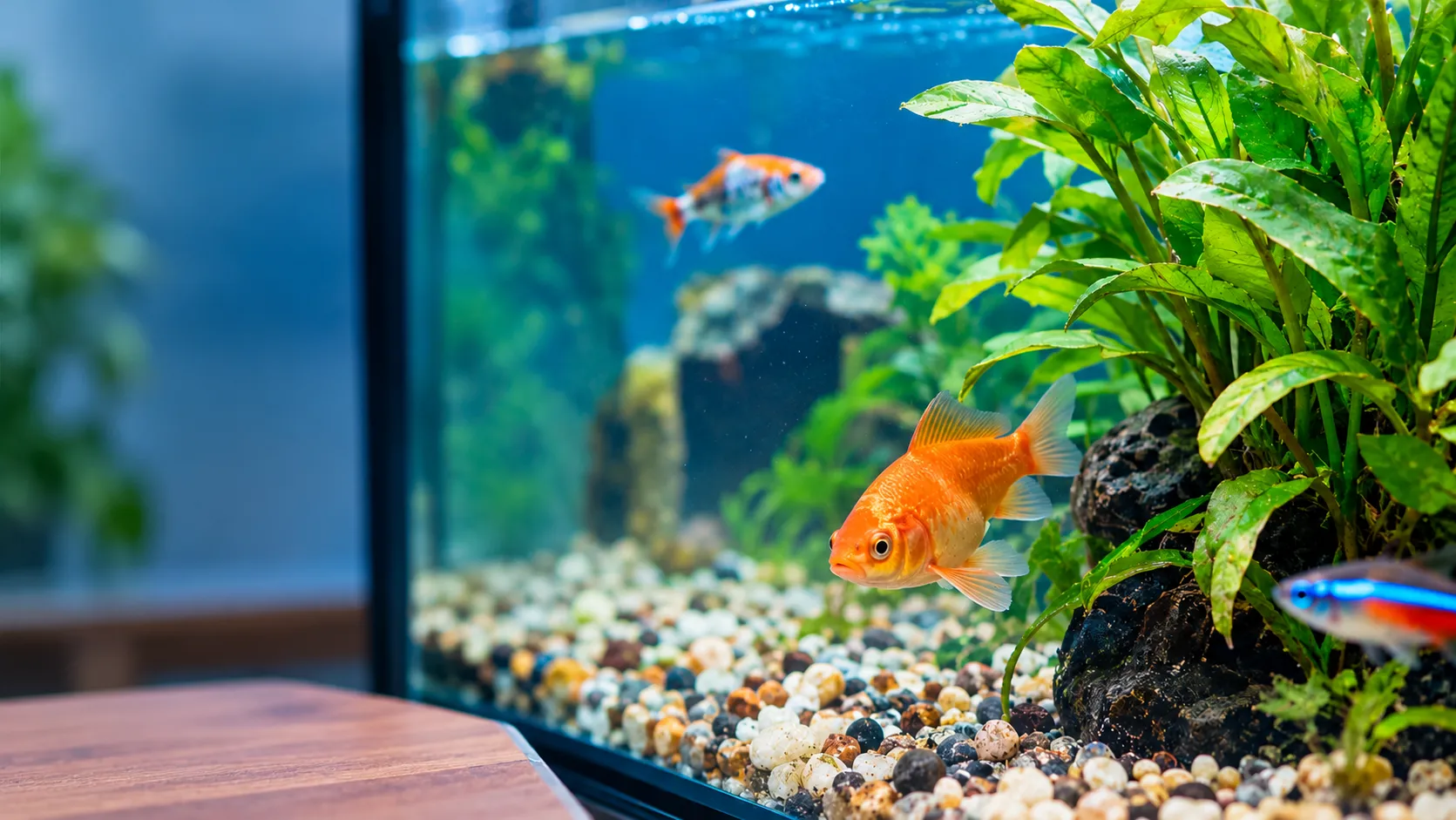
A fish that usually darts across the tank is now hiding behind a plant. Another has stopped eating. Something has changed, but what?
It is tempting to reach for the first bottle of fish medicine you can find. Yet unusual behaviour does not always mean an infection. Poor water quality, low oxygen, stress and sudden temperature changes can cause similar warning signs.
Before treating your fish, slow down and look at the whole aquarium.
Signs That Your Aquarium Fish May Be Unwell
Fish cannot tell us when something is wrong, but their behaviour often changes.
Watch for:
- Loss of appetite
- Gasping near the surface
- Rubbing against gravel or decorations
- White spots or unusual patches
- Torn, clamped or damaged fins
- Swollen areas
- Rapid gill movement
- Unusual swimming
- Hiding more than normal
- Sudden changes in colour
One symptom alone may not reveal the cause. White patches, for example, could have several explanations. Choosing fish medicine based only on appearance may lead to the wrong treatment.
Check the Aquarium Water First
Clear water is not always safe water. Before using aquarium fish medicine, test for:
- Ammonia
- Nitrite
- Nitrate
- pH
- Temperature
In a healthy, fully cycled aquarium, test results should show no measurable ammonia or nitrite. If either is detected, the fish may be reacting to unsafe water rather than an illness that needs medicine.
Think about recent changes too. Did you add new fish? Replace all the filter media? Overfeed the tank? Was there a power cut that stopped the filter or air pump?
Correcting the environment may be the first and most important step.
Understand the Main Types of Fish Medicine
Fish medicines are made for different problems. A product designed for one condition may not help another.
Antifungal Treatments
Fungal growth may appear on damaged or unhealthy tissue. An antifungal product may be suitable when a fungal condition has been correctly identified.
Parasite Treatments
External parasites can cause spots, irritation, rubbing and unusual swimming. Different parasites may need different treatments, so avoid choosing a product based on one symptom alone.
Broad-Purpose Treatments
Some products are designed to address several common aquarium problems. They may be useful when the label matches the symptoms and fish species involved. However, they are not a replacement for checking the water or seeking expert advice.
Supportive Aquarium Products
Some products support the fish’s protective coating or help during periods of stress. These differ from medicines made to treat a specific disease.
Always read the full product description before choosing fish medicine.
How to Use Fish Medicine Safely
Once you have selected a suitable product, follow its label exactly.
Before treatment:
- Confirm that it suits freshwater fish
- Check whether it is safe for your fish species
- Measure the aquarium’s water volume
- Follow the stated dose
- Check its safety for plants, shrimp and snails
- Avoid mixing treatments unless the instructions confirm it is safe
- Keep the filter and oxygen supply working as directed
Some filter materials, including activated carbon, may remove medicine from the water. Only remove them when the product instructions tell you to do so.
Never add an extra dose because the fish has not improved quickly. More medicine does not mean faster healing, and an overdose may harm the fish or affect the aquarium.
Should You Use a Separate Treatment Tank?
A separate treatment tank can make observation easier and may limit other fish or tank residents being exposed to the medicine.
However, the treatment tank still needs stable water, suitable oxygen and the correct temperature. Moving a weak fish into poor conditions can add more stress.
If several fish show the same signs, check the main aquarium’s water and environment before treating only one fish.
Fish Medicine Mistakes to Avoid
Many treatment problems begin with a rushed decision. Avoid:
- Treating without testing the water
- Guessing the condition from one symptom
- Using several medicines together
- Ignoring the product label
- Changing the recommended dose
- Ending treatment earlier than directed
- Using medicine instead of maintaining the tank
If the fish becomes worse, several fish are affected or the cause remains unclear, contact a veterinarian experienced with fish or a knowledgeable aquarium professional.
Choose Fish Medicine with Care
The right treatment begins with the right question. Do not ask only, “Which medicine should I use?” Ask what changed in the tank, what the water tests show and which condition best matches the signs.
Explore fish medicine at Pet Care Hub Fish Medicine page, including Anti Fungus, Triple Care, Fintastic, Fishield and Parafix. Read each product description carefully or contact the Pet Care Hub team from Contact page for help choosing a suitable option for your aquarium.
Frequently Asked Questions
Can I add fish medicine without testing the water?
Testing the water first is strongly recommended. Ammonia, nitrite, temperature or oxygen problems may cause signs that look like illness.
Can I mix two fish medicines?
Do not mix treatments unless both product instructions or a qualified professional confirm it is safe.
Can I treat the whole aquarium?
That depends on the condition and product. Check the label and consider whether a separate treatment tank would be more suitable.